


Adrienne Arsht Center for the Performing Arts of Miami-Dade County presents
Chamber Orchestra of Europe
Yannick Nézet-Séguin, conductor
Beatrice Rana, piano
Johannes Brahms
(1833-1897)
Piano Concerto No. 2
Symphony No. 2
Piano Concerto No. 2
Symphony No. 2
Johannes Brahms
How emo was Johannes Brahms? Consider:
• In one four-month period in 1877, the Hamburg, Germany-born composer wrote his Symphony No. 2 in D major and a motet that he claimed, “casts the necessary shadow on the serene symphony.” Brahms drew the motet’s title—“Wherefore is the light given to them that toil?”—from the Book of Job, that paragon of righteous suffering.
• If Brahms found an answer to the motet’s titular question, it was not resolved “in his heart,” according to biographer Jan Swafford, who notes that soon after completing the work, the composer offered a birthday message to a friend’s child that is so dismal as to be hilarious: “The best is not to be born at all.”
• Of the Second Symphony itself, Brahms claimed it was “so melancholy that you can’t stand it. I have never written anything so sad, so minorish: the score must appear with a black border.” Swafford writes that “black border” was Brahms’ idea of a joke, as the work sounds cheery at first listen.
• During this productive, if somewhat gray, period, Brahms was a quarter-century into an obsession with Clara Schumann, a composer who was 13 years his senior and the widow of his onetime friend and mentor Felix Schumann. “To say the least,” Sarah Fritz writes of Brahms in her new Clara Schumann biography, Madame Composer, “he was poor at communicating his feelings, a dizzying hot-and-cold romantic in love with being in love.”
• In 1878, Brahms grew a beard “for the third and definitive time,” Swafford writes. Brahms even fashioned an identity to complement his new facial hair: a sadsack he called Kapellmeister Müller from Braunschweig. Most people saw through the ruse, but an oblivious Beethoven scholar and composer named Gustav Nottebohm once "spent an entire evening in polite conversation" with Herr Müller.
As any truly funny person might tell you, behind every joke is a held breath or a clenched fist. Brahms, for all his romantic dyspepsia, was in fact a funny person, especially when he was preparing to introduce a new work. “I don’t mind telling you that I have written a tiny, tiny piano concerto with a tiny, tiny wisp of a scherzo,” the composer wrote in a July 1881 letter, according to Swafford’s biography.
The punchline, Swafford writes, is that Brahms’ small concerto was actually “the monumental four-movement Second Piano Concerto in B-flat Major, with its giant scherzo.” Swafford argues that the work represents “Brahms at his most masterful” and “turns a lofty, magisterial face to the world.” The piece debuted November 9, 1881, in Budapest, with Brahms at the piano. (The Second Symphony premiered December 30, 1877, in Vienna with a performance by the Vienna Philharmonic.)
“Brahms is my favorite composer,” conductor Yannick Nézet-Séguin told Arsht Magazine this past February. “He's always been my favorite composer, even when I was a young student. I feel his music is the absolute combination of wonderful, classical perfection, but also a lot of humanity, a lot of emotion. And when I say, ‘humanity, emotion,’ I mean that there are some moments that are really grand and majestic, but others that are very, very intimate.”
In a moving 2020 essay for The New Yorker, music critic Alex Ross described the effect of listening to Brahms after learning of his mother's death. “I find him the most companionable, the most sympathetic of composers,” Ross wrote. “There is enormous sadness in his work, and yet it is a sadness that glows with understanding, that eases gloom by sharing its own. The music seems in a strange way to be listening to you, even as you listen to it.”
Brahms leaned into such connections when corresponding with his listeners, as Swafford reports he did in one 1879 letter to a fan. "I would have to confess that I am ... a severely melancholic person," Brahms wrote, "that black wings are constantly flapping above us."
The composer was not without mystery. In a detailed dissection of the Second Symphony, Swafford emphasizes the work's tendency to be "vaguely disquieting in its ambiguity" and finds that "Brahms' technique ... is to hide tonal references within the ambiguity, so the revealing of the actual key is a matter of closing in on an implicit presence. ... (He was as expert at hiding key and meter as at hiding himself)."
While that enigmatic quality continues to draw people to Brahms' music and story nearly 130 years after his death, it didn't always benefit his relationships during his lifetime. "Would you believe that in spite of our long and intimate friendship Johannes has never told me anything about what excites or upsets him?" Swafford quotes a teary Clara Schumann telling a guest at Brahms' 47th birthday party. "He is just as much of a riddle, I could almost say as much of a stranger, as he was to me 25 years ago."
— Jake Cline
Yannick Nézet-Séguin

Photo courtesy Landon Nordmann.
Yannick Nézet-Séguin has been music director of New York’s Metropolitan Opera since 2018, The Philadelphia Orchestra since 2012 and Montréal’s Orchestre Métropolitain since 2000, where he is now conductor for life. He served as music director of the Rotterdam Philharmonic Orchestra from 2008 to 2018 and remains honorary conductor. From 2008 to 2014, he was principal guest conductor of the London Philharmonic Orchestra, and in 2016 became the Chamber Orchestra of Europe’s third-ever honorary member. During the 2019-20 and 2020-21 seasons, he was a Carnegie Hall Perspectives Artist.
In August 2024, the Met announced the extension of his tenure through the 2029-30 season. Highlights of the 2026-27 season include the world premiere of Missy Mazzoli’s Lincoln in the Bardo, a new production of Verdi’s Macbeth, revivals of Tosca, Der Rosenkavalier and Parsifal, and concerts with the Met Orchestra and Met Orchestra Chamber Ensemble at Carnegie Hall.
In Philadelphia, he continues his Mahler symphonic cycle and performs with leading soloists such as Yuja Wang and Alexandre Kantorow. With the Orchestre Métropolitain, highlights include concert performances with violinist María Dueñas as well as R. Strauss’ Der Rosenkavalier in concert.
This season, Nézet-Séguin continues his Brahms cycle with the Chamber Orchestra of Europe across Europe and the US and returns to Vienna to conduct Mahler’s Symphonies Nos. 2, 4 and 9 with the Wiener Philharmoniker, followed by a US tour.
Beatrice Rana

Photo courtesy Simon Fowler.
Beatrice Rana is celebrated on the international stage as "one of the most insightful and prodigiously gifted artists of the new generation" (The New York Times). Renowned for her clarity of touch, poetic sensibility and passionate interpretations, Rana performs in major concert halls and with the world's most esteemed orchestras, conductors and artists.
Rana collaborates with conductors such as Zubin Mehta, Gianandrea Noseda, Susanna Mälkki, Vladimir Jurowski, Lahav Shani and Klaus Mäkelä. The many high-profile orchestras she has performed with include the Berlin Philharmonic, Munich Philharmonic, Lucerne Festival Orchestra, Royal Concertgebouw, London Symphony, The Cleveland Orchestra, New York Philharmonic and the Philadelphia Orchestra.
She performs solo recitals at the most prestigious venues worldwide and is a regular guest at major festivals such as the Lucerne Festival, BBC Proms, Edinburgh International Festival and Festival de Pâques d’Aix en Provence.
Rana records exclusively for Warner Classics. Her 2025 release features a selection of Bach’s Keyboard Concertos, which she play-directs with the Amsterdam Sinfonietta. In 2023, she recorded the piano concertos of Clara and Robert Schumann with the Chamber Orchestra of Europe and Yannick Nézet-Séguin, an album that was widely acclaimed. In 2017, Rana released a landmark recording of Bach’s Goldberg Variations, which received international critical praise and earned her Female Artist of the Year at the Classic BRIT Awards. Her awards also include Young Artist of the Year at the Gramophone Awards, Newcomer of the Year by BBC Music Magazine and Discovery of the Year at the Edison Awards. Her 2015 debut album for Warner, featuring Prokofiev’s Piano Concerto No. 2 and Tchaikovsky’s Piano Concerto No. 1, was recorded with Antonio Pappano and the Accademia Nazionale di Santa Cecilia.
Rana attracted international attention after winning second prize and the audience award at the Van Cliburn competition in 2013. Prior to that, she won first prize and all special prizes at the Concours musical international de Montréal in 2011 at age 18.
Rana was born into a family of musicians and began learning the piano at age 4. She studied under the guidance of Benedetto Lupo at the Nino Rota Conservatory of Music in Monopoli, where she also pursued composition with Marco della Sciucca. She continued her piano studies with Lupo at the Accademia di Santa Cecilia and studied with Arie Vardi in Hannover. In 2017, Rana founded the chamber music festival Classiche Forme in her hometown of Lecce, Puglia, which was awarded a medal from Sergio Mattarella, president of the republic, in recognition of the cultural value it brings to the region.
Chamber Orchestra of Europe

Photo courtesy Julia Wesely.
The Chamber Orchestra of Europe (COE) was founded in 1981 by a group of young musicians who became acquainted as part of the European Community Youth Orchestra (now EUYO). The COE now includes about 60 members, who pursue parallel careers as principals or section leaders of nationally based orchestras, as eminent chamber musicians and as tutors of music.
From the start, the COE’s identity was shaped by its partnerships with leading conductors and soloists. Claudio Abbado served as an important mentor in the early years. He led the COE in staged works such as Rossini’s Il viaggio a Reims and Il barbiere di Siviglia and Mozart’s Le Nozze di Figaro and Don Giovanni, and conducted numerous concerts featuring works by Schubert and Brahms. Nikolaus Harnoncourt also had a major influence on the development of the COE through his performances and recordings of all the Beethoven symphonies, as well as through opera productions at the Salzburg, Vienna and Styriarte festivals.
Currently, the Orchestra works closely with Yannick Nézet-Séguin, Sir Antonio Pappano, Sir Simon Rattle, Sir András Schiff and Robin Ticciati, who are Honorary Members (following in the footsteps of the late Bernard Haitink and Nikolaus Harnoncourt).
The COE has strong links with many of the major festivals and concert halls in Europe. It has been "Residenzorchester Schloss Esterházy" in Eisenstadt since 2022. In partnership with the Kronberg Academy, the COE in 2022 became the first orchestra in residence at the Casals Forum in Kronberg.
With more than 250 works in its discography, the COE has won numerous international prizes, including two Grammy Awards and three Gramophone Record of the Year Awards. Its most recent releases include a 2023 recording of Clara Wieck-Schumann's and Robert Schumann’s Piano Concertos with Beatrice Rana and Yannick Nézet-Séguin. In July 2024, Deutsche Grammophon released the COE's album of Brahms Symphonies, recorded in 2022 and 2023 at the Baden-Baden Festspielhaus with Nézet-Séguin.
In 2009, the COE Academy was created in order to give a select group of exceptional students the chance to study with the principal players of COE and to give the students the opportunity to tour with the orchestra.
The COE is a private orchestra that receives invaluable financial support from the Gatsby Charitable Foundation and a further number of "Friends," including Dasha Shenkman, Sir Siegmund Warburg’s Voluntary Settlement, the Rupert Hughes Will Trust, the Underwood Trust, the 35th Anniversary Friends and American Friends.
Chamber Orchestra of Europe
Arsht Plus: Classical Conversations
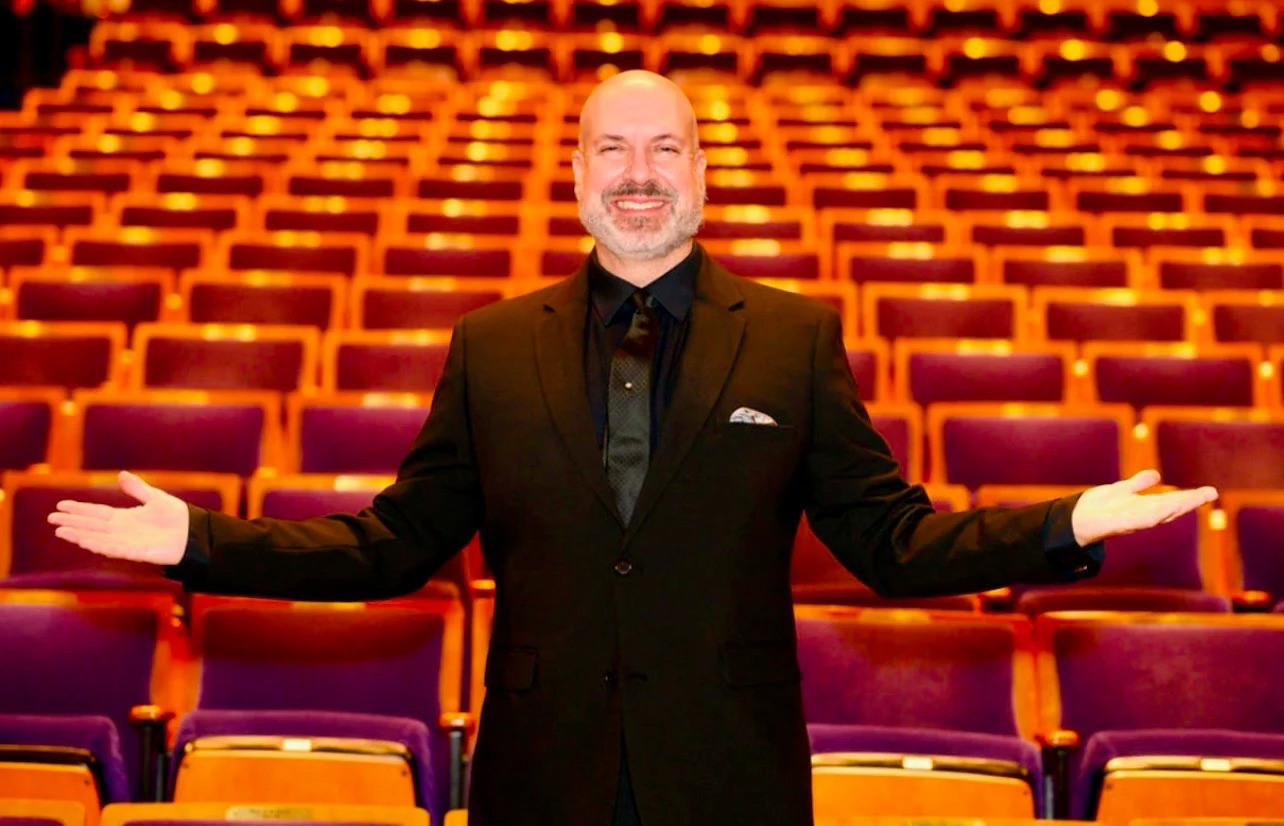
Scott Flavin enjoys an incredibly versatile musical career. Since 1998, he has been professor of violin at the Frost School of Music, where he teaches violin, conducting and chamber music. As a violinist, he is in demand as a concertmaster, chamber musician and recitalist, and is first violinist of the internationally acclaimed Bergonzi String Quartet and violinist of PULSE Trio, in addition to the Bergonzi Trio. Flavin is resident conductor of The Henry Mancini Institute Orchestra, and regularly appears on the podium in concert, on television and on recordings. He is also an active arranger, composer and writer. His recordings include chamber music on the Naxos and Centaur labels, and commercial recordings on Sony, EMI and Warner Bros., including appearances on over a dozen Grammy Award-winning albums.
Donations help the Arsht transform lives by connecting our community to the arts. Make a gift today at ArshtCenter.org/Gift.
Postshow Survey
Your feedback is important to us. Please complete a brief survey about your recent Arsht experience.
Presenting Sponsor

Supporting Sponsors




Institutional Sponsors


Adrienne Arsht Center
Inspirational Bon Mot Series by Adrienne Arsht